
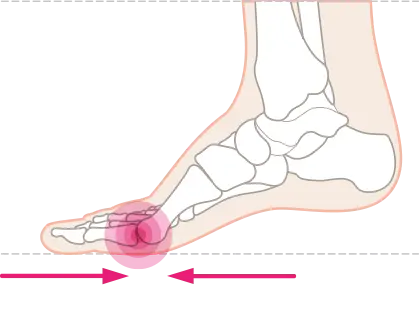
What happens in the foot?
In hallux valgus, the big toe leans towards the other toes while the first metatarsal shifts in the opposite direction. The visible bump is part of the altered joint alignment, not a separate lump that can be massaged away.
The change usually develops slowly. It may remain almost painless for years or cause pain, irritated skin and difficulty walking. Appearance alone does not determine the need for treatment; symptoms and daily function matter most.
Common symptoms
Typical signs include a leaning big toe, a prominence at its base, redness, tenderness, calluses and pain in narrow shoes. The joint may become stiff and the big toe may overlap the second toe.
Sudden severe pain, marked heat or rapidly increasing swelling may have another cause, such as gout, arthritis or injury, and needs medical assessment.
Why do bunions develop?
Foot structure and family predisposition matter. Narrow, tight shoes are not the only cause, but may increase pressure and aggravate symptoms in a susceptible foot. Some inflammatory and neuromuscular conditions also raise risk.
A professional assessment considers alignment, movement, pain and gait. If needed, weight-bearing X-rays show how the bones line up while standing.
When should you seek help?
Arrange an assessment if pain limits walking or work, footwear is difficult, wounds recur or the deformity is clearly progressing. Numbness, diabetes and circulation problems require particular caution.
An early consultation does not automatically mean surgery. Care often starts with suitable footwear, pressure relief and symptom-focused options.